Objects of Desire
Picket fences by rule: Seaside, Rosemary Beach and Alys Beach
Three Gulf towns built to a code: Seaside’s fences, Rosemary Beach’s contours, Alys Beach’s white.

Photo Credit
Image courtesy of © paigeh · CC BY-SA 2.5 via Wikimedia CommonsCan a town be designed as carefully as a house? On Scenic Highway 30A, three have been. Seaside, Rosemary Beach and Alys Beach were each planned to a written code by Andrés Duany’s firm and its partners, and one of them has a post office widely considered among the most photographed in the US. No prices here, only buildings, checked against the towns’ own pages in November 2026.
The town that started it
In 1946 J.S. Smolian bought 80 acres in the Florida Panhandle as a family retreat. In 1981 his grandson Robert Davis and Robert’s wife Daryl founded Seaside there, working with two up-and-coming architects, Andrés Duany and Elizabeth Plater-Zyberk. They were drawing a town, not a resort, and it shows in every street.
Every building follows The Seaside Design Code, and the code reaches down to the garden gate: in the residential streets, no fence may repeat the design of another on the same street. Lawns that need irrigation are not part of the code, and everyone, it says, should be able to enjoy the night sky. Even the 52 Medjool palms in Central Square were cloned from one tree, which is uniformity of a more forgivable kind.
Seaside went international as the main filming location for The Truman Show, and its post office is widely considered one of the most photographed in the US. The film’s hero spent the whole picture trying to escape a perfect town; visitors now drive for hours to get into it.
The town’s own list of facts is full of small engineering. The amphitheatre lawn doubles as a detention pond for storm water; the sand is mostly pure white quartz from the Appalachian Mountains; and the original logo, hand-drawn by Daryl Davis, became what the town calls “the t-shirt that built the town”. Robert Davis even bought a 1955 Bubble Airstream along the way. Even the souvenirs, it seems, were part of the plan.
Contours, not grids
At the eastern end of 30A, the Rosemary Beach Land Company and its president, Patrick Bienvenue, launched Rosemary Beach in 1995 on 107 Gulf-front acres, to a town plan by Duany and Plater-Zyberk. The land was not flattened: its roads were laid to follow the natural contours, and the plan sets out 12 basic building types that give each neighbourhood its character. The result looks less planned than it is, which is the whole trick.
White walls against the weather
Alys Beach is the youngest of the three. The Stephens family bought 158 acres on 30A at auction in the late 1970s, and the town was born in 2004, planned by Andrés Duany and Galina Tachieva of DPZ. Driving home from that auction, Elton Stephens reportedly thought, “I hope my wife, Alys, likes it.” The town carries her name, so presumably she did.
The film’s hero spent the whole picture trying to escape a perfect town; visitors now drive for hours to get into it.
Choosing a Bermuda and Antigua style was, in the town’s own words, a defining moment. The houses are sculptural solid white volumes of fortified masonry, and Duany counts an architecture “resistant to hurricanes” among its legacies. Its builders, one of the family says, worked “with square inches” rather than square feet.
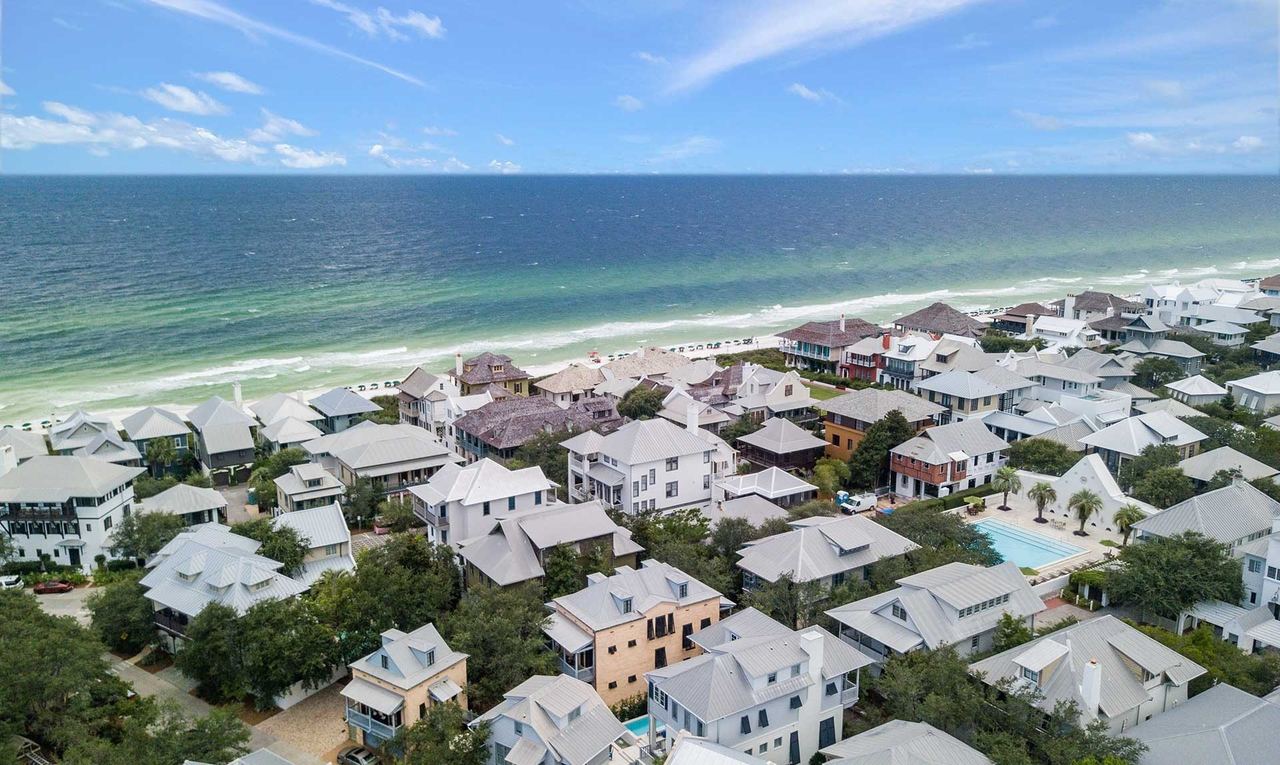
Photo Credit
Image courtesy of © Rosemary BeachThe code is policed with care. Erik and Marieanne Vogt serve as the town architects, and the result is a place where even a garden wall is a design decision. Against a white town and a blue Gulf, the only colour anyone needs to add is the sunset.
Why do three towns on one road matter beyond the beach? Because together they are an argument, made in stucco and timber, that a holiday place can be built like a real town, with a code instead of a car park at its centre. Whether you find the result enchanting or slightly too tidy, it is worth seeing as an idea, not only as a view.
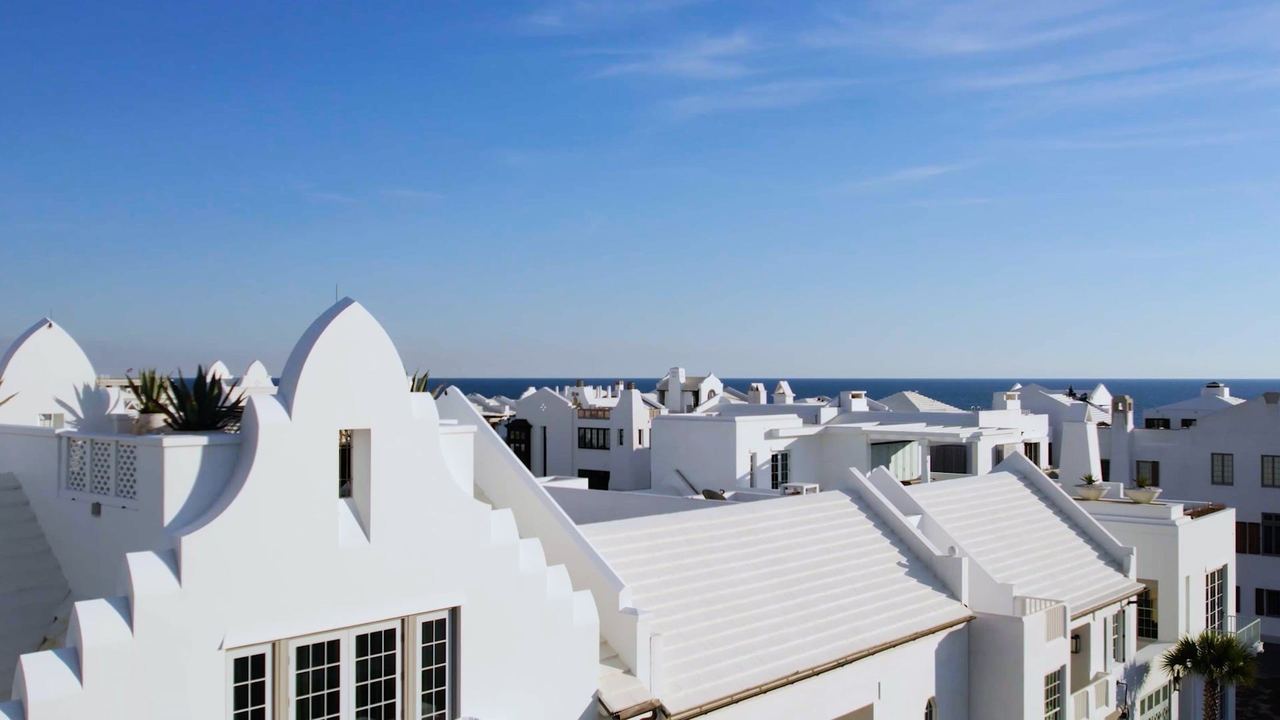
Photo Credit
Image courtesy of © Alys BeachOur advice: drive 30A from west to east in one slow afternoon, park once in each town and walk; a design code is best read on foot. For the new towers of the Gulf and Atlantic coasts, see our new developments list.
Why it's on our list
- The town that started it
- Contours, not grids
- White walls against the weather
Location
The map comes from Google Maps, which sets its own cookies once it loads.
More in depth
 Objects of DesireRum, lime and a hundred years: the mojito, the Columbia and HMFThe IBA mojito, the Columbia’s century in Ybor City and cocktail chic at HMF, The Breakers.
 Objects of DesireLess parked than crouched: the electric Jaguar and the new supercarsJaguar’s Type 00 and Type 01, Ferrari’s first electric car and the record-breakers around them.
 Objects of DesireThirty years on the fairway: The Amelia and its racers’ weekendThe Amelia Concours returns 4–7 March 2027, honouring Scott Pruett, with Cars & Caffeine on Sunday.